
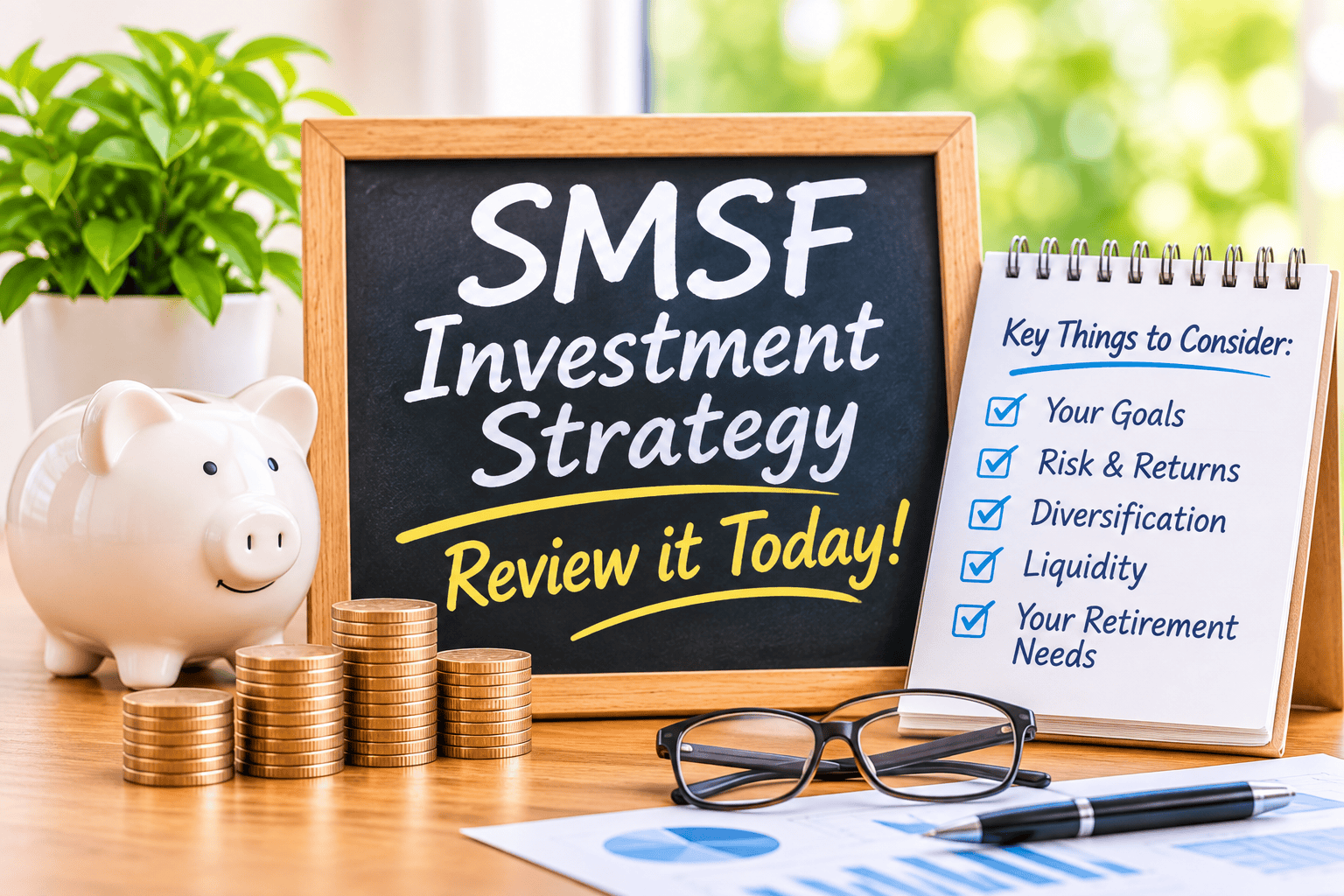
Reviewing your fund’s investment strategy
When was the last time you reviewed your SMSF’s investment strategy?
As your retirement needs change, your fund’s investment strategy should change with you. What worked well during your wealth-building years may not be suitable once you start drawing on your retirement savings.
Reviewing your investment strategy is more than just a compliance requirement. It is an important step in protecting your retirement wealth and making sure your fund continues to meet your needs.
Why Reviewing Your Investment Strategy Matters
Under superannuation law, SMSF trustees are required to develop, regularly review and implement an investment strategy that considers the fund’s overall circumstances.
While the law does not specify exactly how often a review must occur, the ATO expects trustees to review their investment strategy at least annually.
Many trustees choose to review their strategy:
- Before or at the beginning of a new financial year; or
- When reviewing the fund’s financial statements and accounts.
Either approach is acceptable. What matters is that the review is completed, properly documented and available for the fund’s auditor.
You should record whether changes were needed or whether the existing investment strategy remains appropriate.
When Should You Review Your SMSF Investment Strategy?
An annual review is essential, but certain events may call for an earlier review.
These include:
- Significant market movements or corrections;
- A member joining or leaving the fund;
- A member commencing a pension; or
- Changes in members’ retirement plans or financial circumstances.
These events can affect your fund’s investment objectives, risk profile and cashflow needs.
What Should Your Investment Strategy Consider?
An SMSF investment strategy generally covers two key areas:
1. Investment Objectives
What does your fund aim to achieve?
This may include generating investment returns, growing retirement savings or providing a reliable income during retirement.
Your objectives should reflect the members’ ages, retirement plans, financial needs and tolerance for investment risk.
2. Investment Strategy
How will your fund achieve these objectives?
This outlines how the fund intends to invest its assets, including its investment allocation and the types of investments it will hold.
When reviewing your strategy, trustees should consider:
- Investment risk and returns – Are your investments appropriate for your objectives and expected cashflow needs?
- Diversification – Are your investments sufficiently spread across different assets, or is the level of concentration appropriate for your circumstances?
- Liquidity – Can your fund access cash when needed?
- Ability to meet liabilities – Will your fund have enough resources to meet current and future obligations?
- Insurance – Should insurance cover be maintained for one or more members?
These considerations do not mean every SMSF must follow the same investment approach. The strategy should reflect the fund’s own circumstances, and trustees should document why their investment decisions are appropriate.
Is Your Fund’s Investment Strategy Suitable for Retirement?
This is particularly important when members transition from accumulating retirement savings to drawing down their benefits.
During the accumulation phase, members are generally focused on growing their wealth. However, once pension payments begin, the fund needs to consider regular cash withdrawals and ongoing liquidity.
For example, a fund holding only one property and a bank account may have been suitable during the accumulation phase. But will the rental income and available cash be enough to support pension payments during retirement?
A property may be a valuable asset, but it does not always provide readily available cash.
If rental income cannot cover pension payments and other fund expenses, trustees may need to consider selling an asset, adjusting their investment allocation or maintaining a larger cash reserve.
The same concern applies to investments that are difficult to sell, such as unlisted companies or trusts.
Failing to plan for liquidity can create difficulties, particularly when the fund needs to meet minimum pension payment requirements before the end of the financial year.
A Property-Only SMSF: Is It Still Appropriate?
Many Australian investors are comfortable investing in property. However, property-heavy investment strategies may not suit every SMSF, particularly when members are already receiving pensions.
The important question is not simply whether the property is performing well.
It is whether the fund can generate sufficient income and access cash when needed to meet its obligations and support the members’ retirement lifestyle.
An investment strategy that worked well in the past may need to be reconsidered as the fund and its members evolve.
Make Your Investment Strategy Work for Your Retirement
Your SMSF represents years of hard work and savings. Reviewing its investment strategy should not be treated as just another compliance task.
It is an opportunity to step back, assess your investments and make sure your fund remains aligned with your retirement goals.
A well-considered investment strategy can help you prepare for changing circumstances, manage cashflow requirements and make informed decisions about your retirement wealth.
So, have you reviewed your SMSF investment strategy lately?
Now may be the perfect time to make sure your investments are still working towards the retirement you want.
Need help reviewing your SMSF investment strategy?
Our team at Magnus Group can help you understand your SMSF obligations and ensure your investment strategy is properly reviewed and documented.
Call us on 07 3483 0100 or send us a message if we can help.